
Milano Cortina 2026:
Inspired by Olympic FPV Drone Pilots

FPV & Olympic Games 2026
DV_2026-Milan-FPV-Drones_001

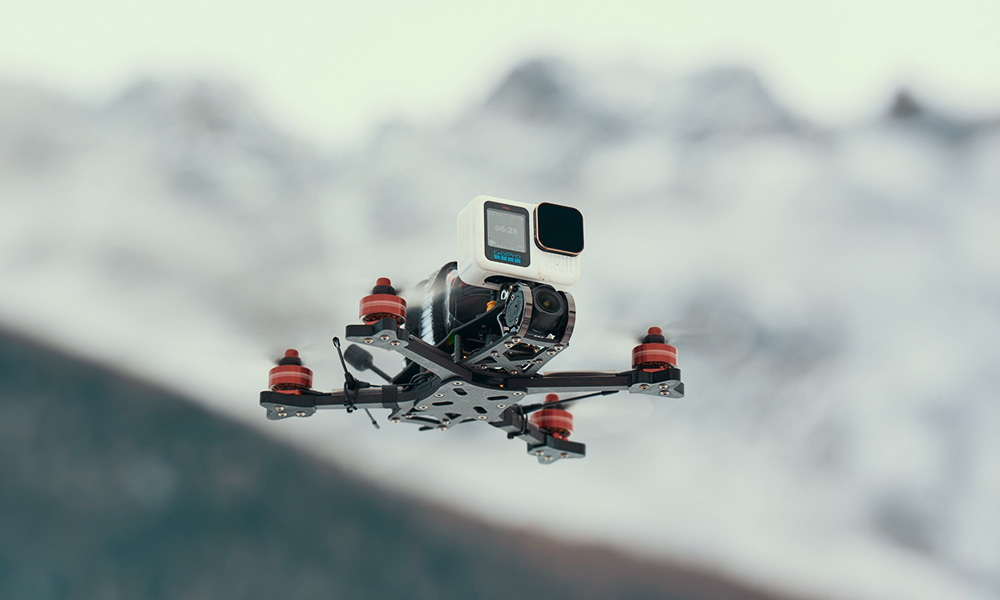
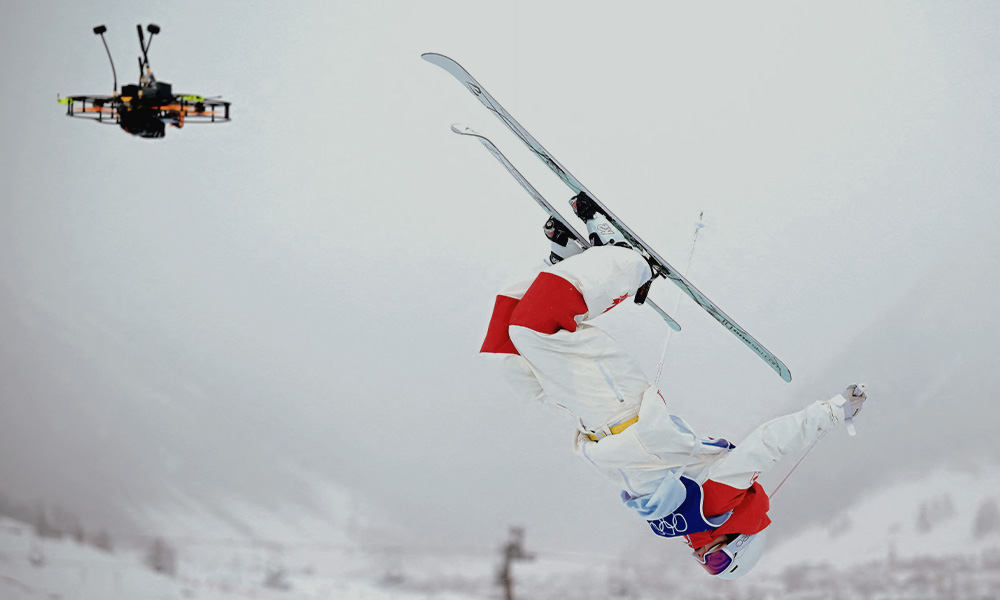
FPV Drone with GoPro. Photo Credit: © Olympic Broadcasting Services (OBS)

On your mark, get set, go!


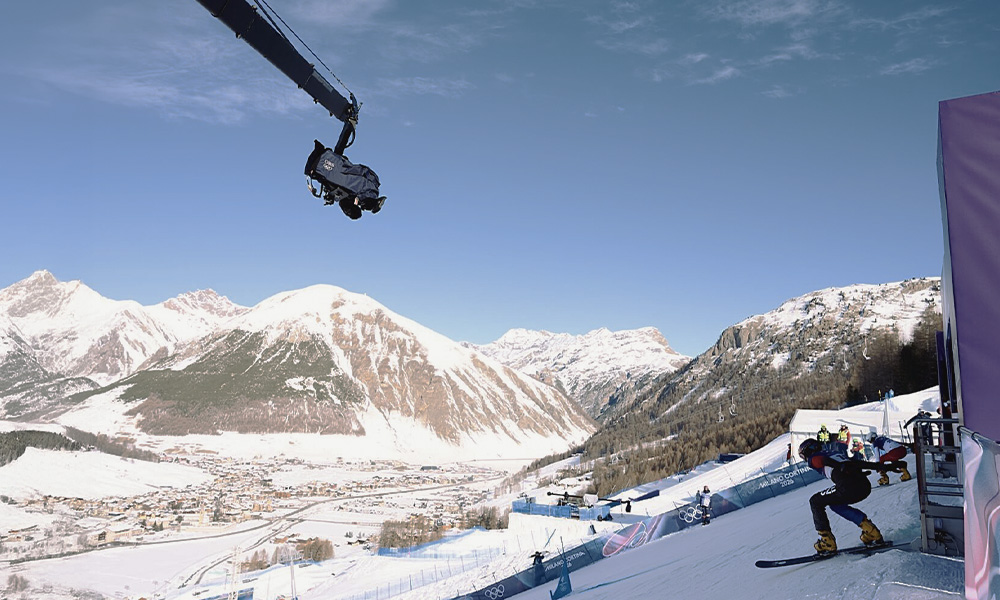
But what truly accelerates the viewer experience is immersive FPV (First-Person View) drone coverage – flying alongside ski jumpers mid-air, tracking luge athletes inside ice walls, and carving down snowboard runs at race speed.

Canadians have been captivated by the cinematic camera coverage of the Milano Cortina 2026 Winter Olympics. From ice-level views in hockey and speed skating to sweeping boom shots across alpine slopes, the visual storytelling has reached a new level.

The result isn’t just coverage. It’s perspective…

Many of these FPV camera operators are athletes themselves – individuals who translated competitive instincts into aviation precision. Their edge comes from structured training, regulatory discipline, and thousands of hours of practice.

That’s where inspiration turns into a journey.

Looking Back:
The Evolution of Sports Broadcasting


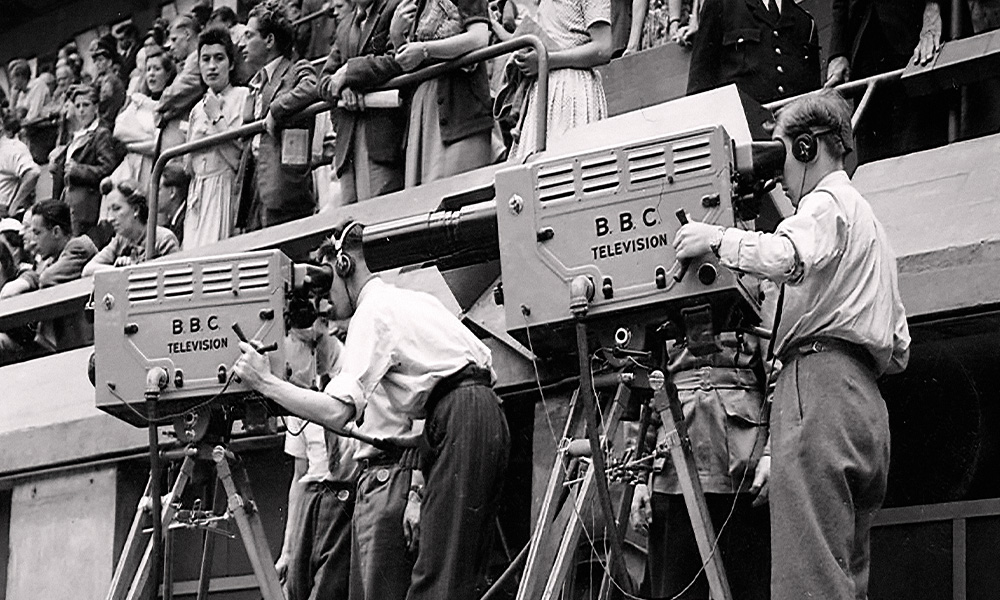
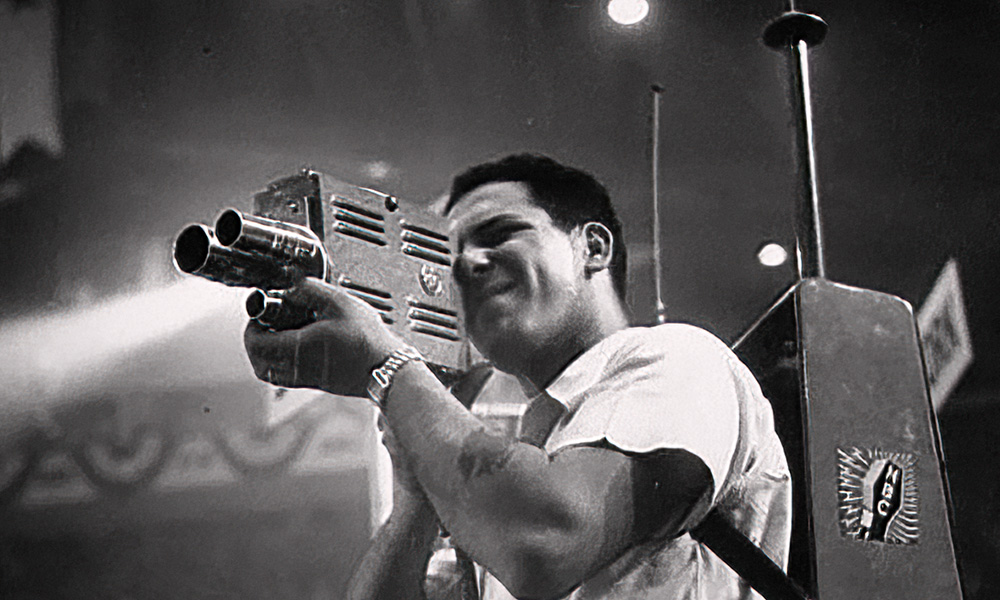
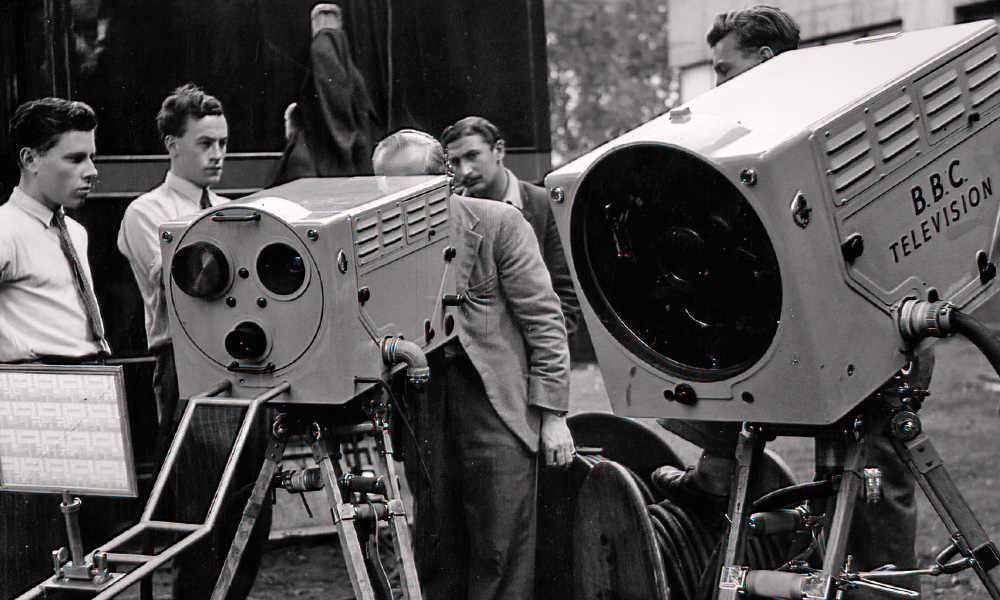
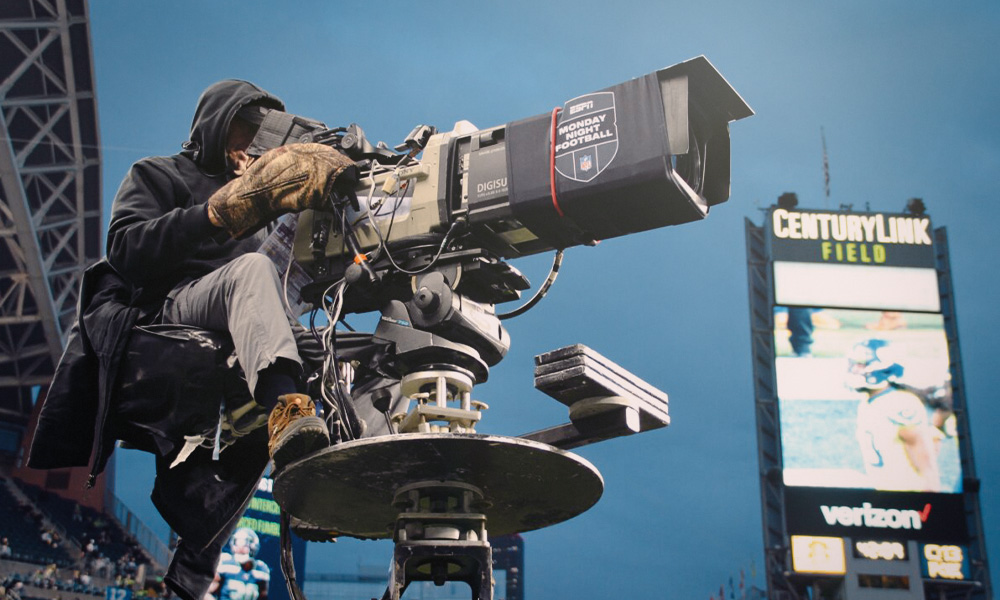
In early televised sports coverage, viewers experienced events primarily through fixed or cable-mounted cameras. ABC’s Wide World of Sports once defined the era with its iconic phrase: “The thrill of victory and the agony of defeat.”

1948 Wembley Olympics First Live Broadcast. Photo credit: © BBC. 1964 Tokyo Summer Olympics First International Broadcast. Photo credit: © NBC

Today, that thrill is captured in three dimensions!

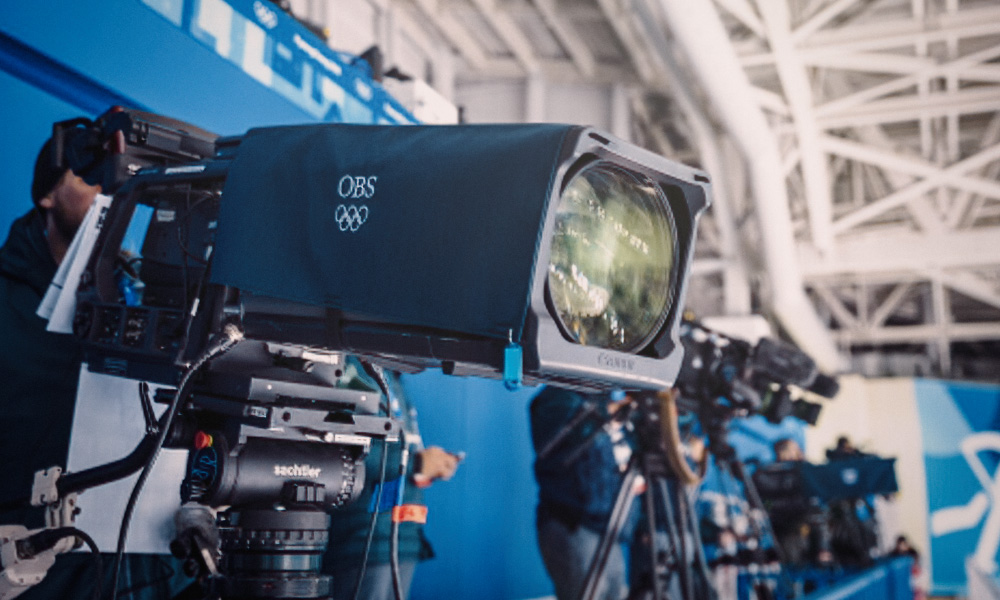
Modern Broadcast Systems. Photo credit: © Olympic Broadcasting Services (OBS)

The International Olympic Committee entrusts Olympic Broadcasting Services (OBS) as host broadcaster for the Olympic Games. Since drones debuted at the Sochi 2014 Winter Games, their role has expanded with each edition. By Paris 2024, drones were introduced into live mountain bike coverage. Traditional broadcast relies on: Fixed and semi-fixed cameras, Cable tracking systems, Cranes and helicopters.

FPV drones introduce a dynamic third dimension – delivering the athlete’s perspective in real time. Combined with AI-assisted stitching, multi-angle capture, and high-speed tracking systems, sports coverage now feels immersive rather than observational.

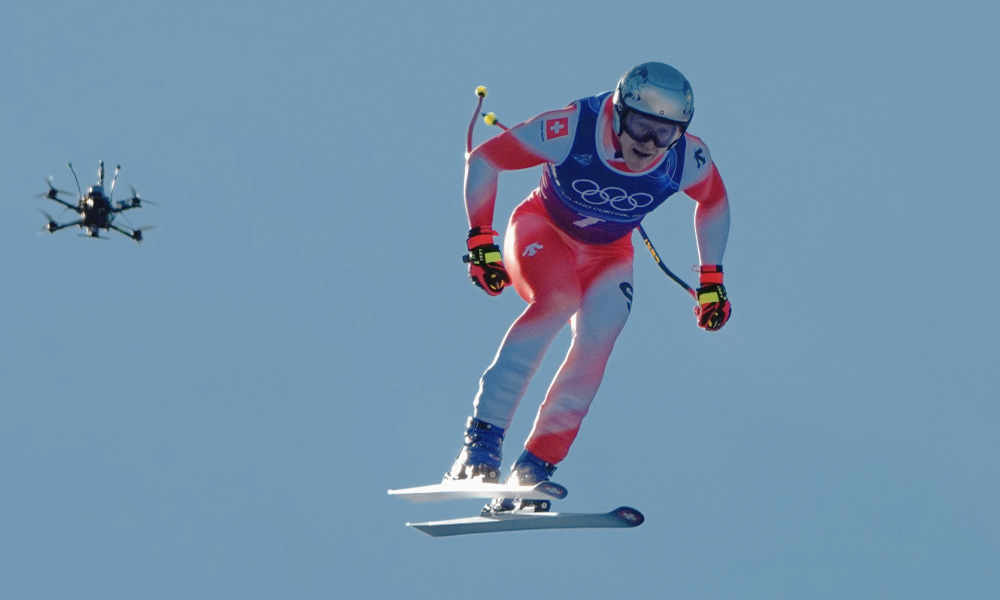
Skier (Marco Odermatt) is followed by a FVP Drone. Photo credit: © AP Photo / John Loche 

Drones Take Centre Stage
at Milano Cortina 2026


Milano Cortina 2026 features the most extensive use of FPV drones in Olympic history.

Olympic Broadcasting Services deployed:

25 Drones across venues

15 FPV Cinewhoop units for immersive athlete tracking

10 Traditional hover drones for scenic transitions

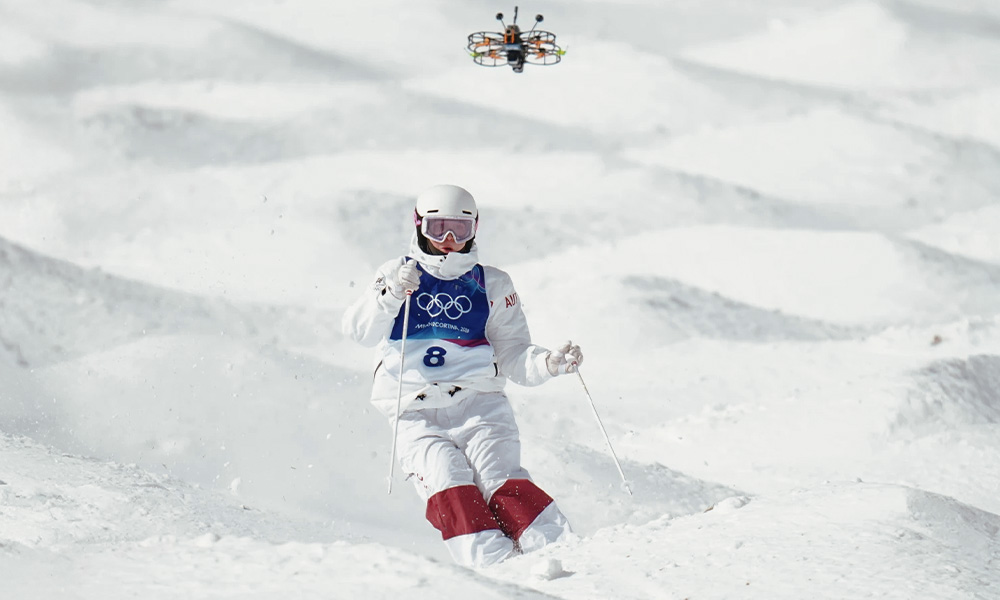
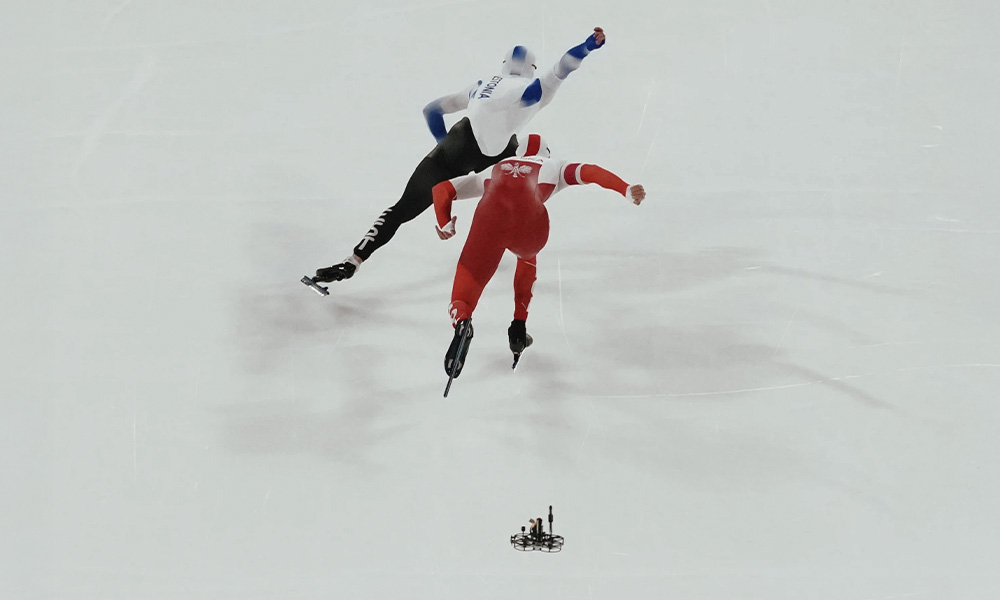
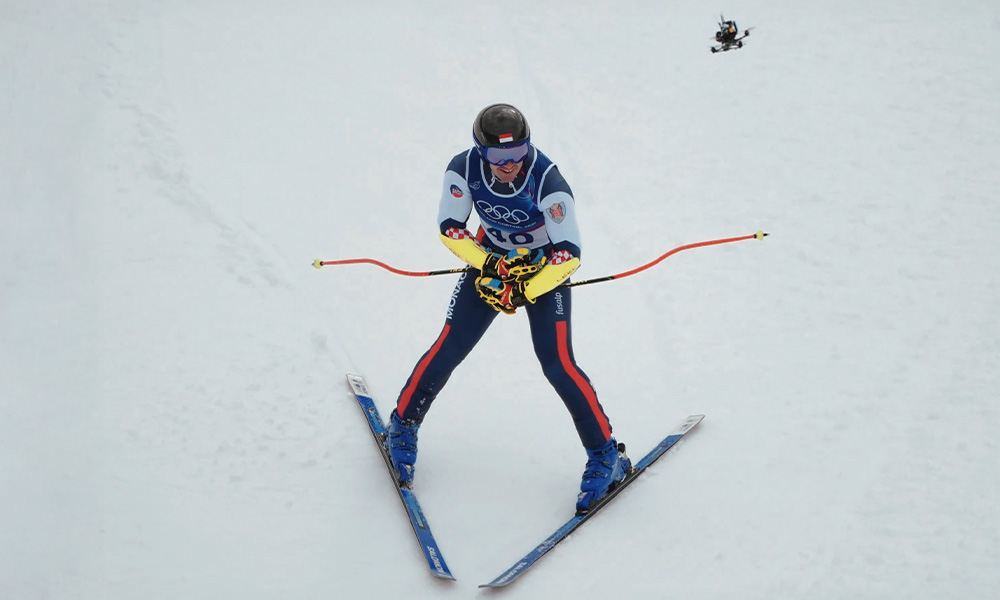
Photo credits: © AP Photo / Gregory Bull / Cristophe Ena / Rebecca Blackwell

These custom-engineered FPV drones weigh approximately 243 grams and can exceed speeds of 140 km/h (90 mph). Designed with inverted propeller “pusher” configurations, they provide enhanced aerodynamic stability during high-G turns.

Each drone operates under a structured three-person team:

PILOT 

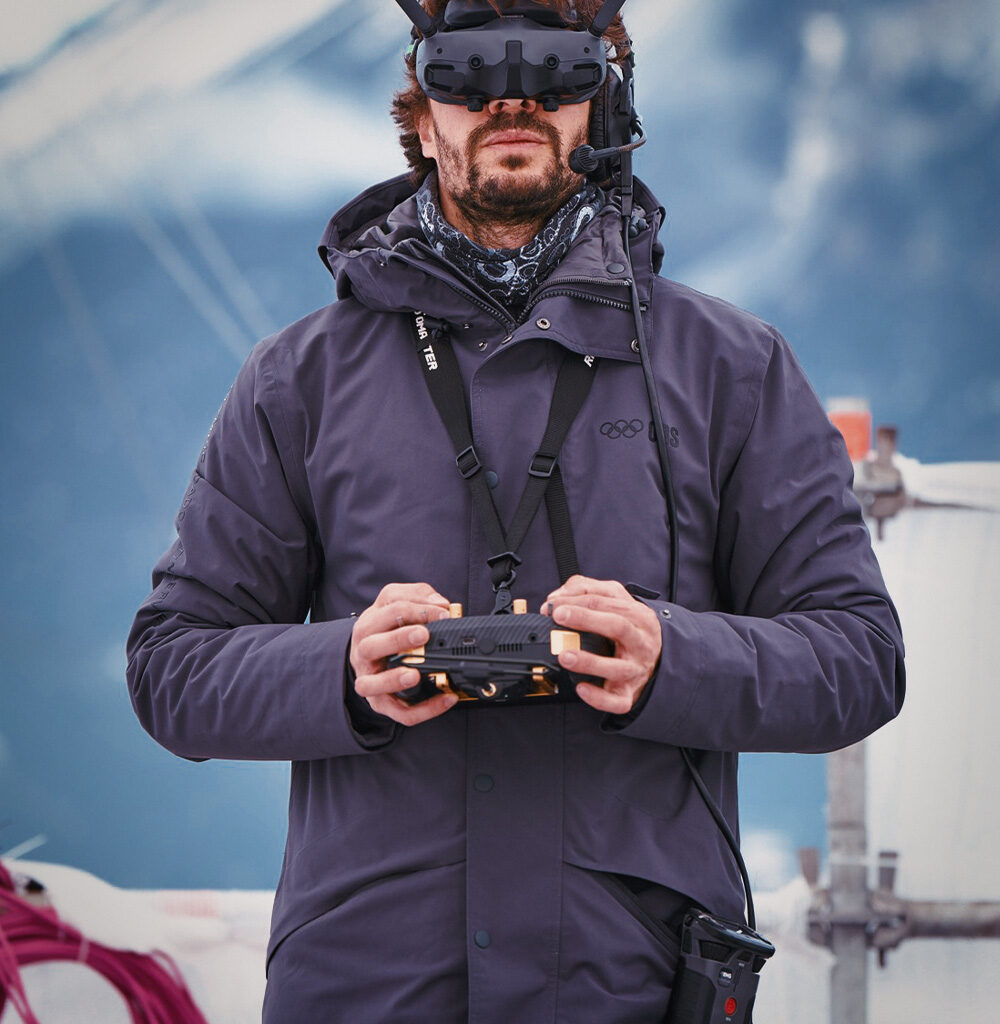
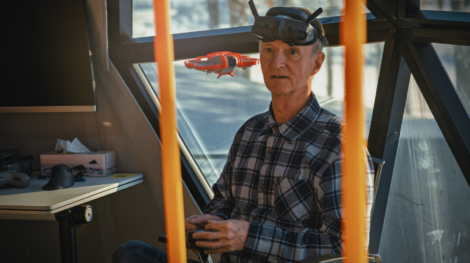
Wearing FPV goggles, fully focused on flight path and obstacle avoidance

DIRECTOR

Managing timing and broadcast composition

TECH. / SPOTTER

Monitoring telemetry, managing batteries, and maintaining technical reliability

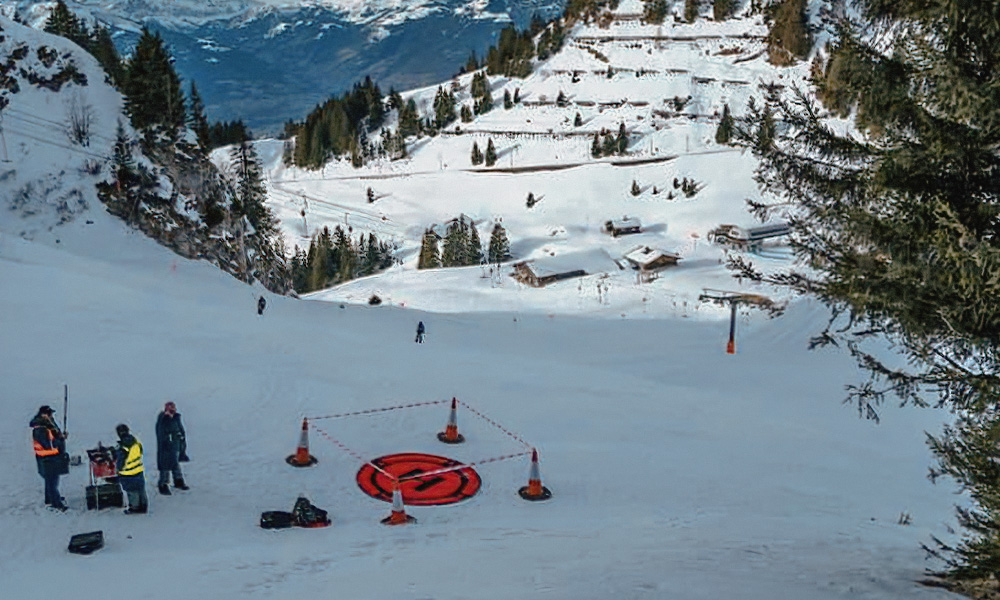
FPV Pilot, FPV Spotter, Drone Take-off/Landing Area. Photo credit: © Olympic Broadcasting Services (OBS)

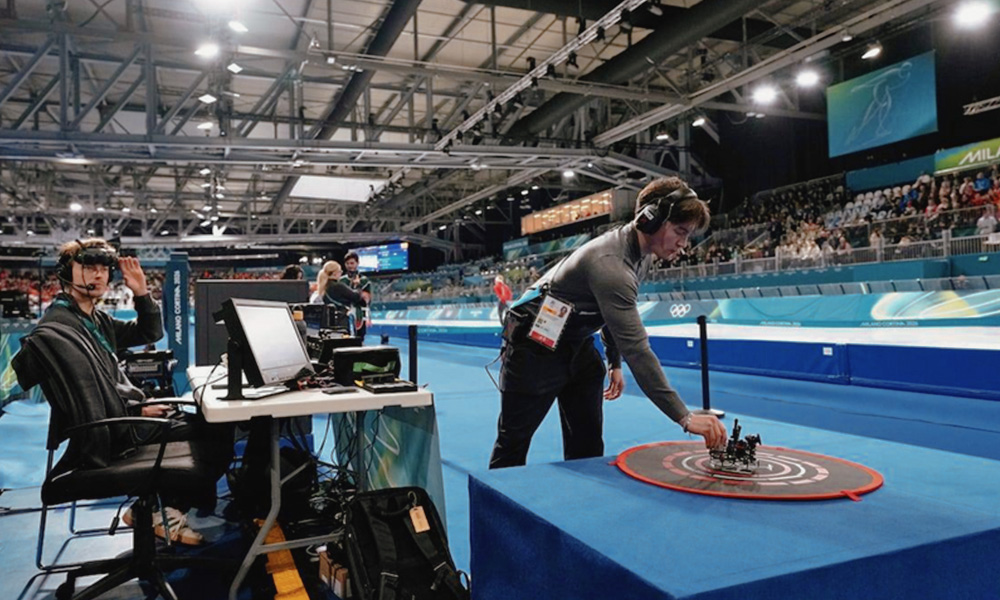
The Pilot communicates constantly with the OBS van at the venue, which connects directly to the International Broadcasting Centre for live production control. This is not recreational flying. It is coordinated aviation under strict safety and regulatory compliance.

DV_2026-Milan-FPV-Drones_002

Skier (Anri Kawamura) is followed by a FPV Drone. Photo credit: © Matusoka / Aflo Sport Image

From Olympic Athlete
to High-Performance FPV Pilot


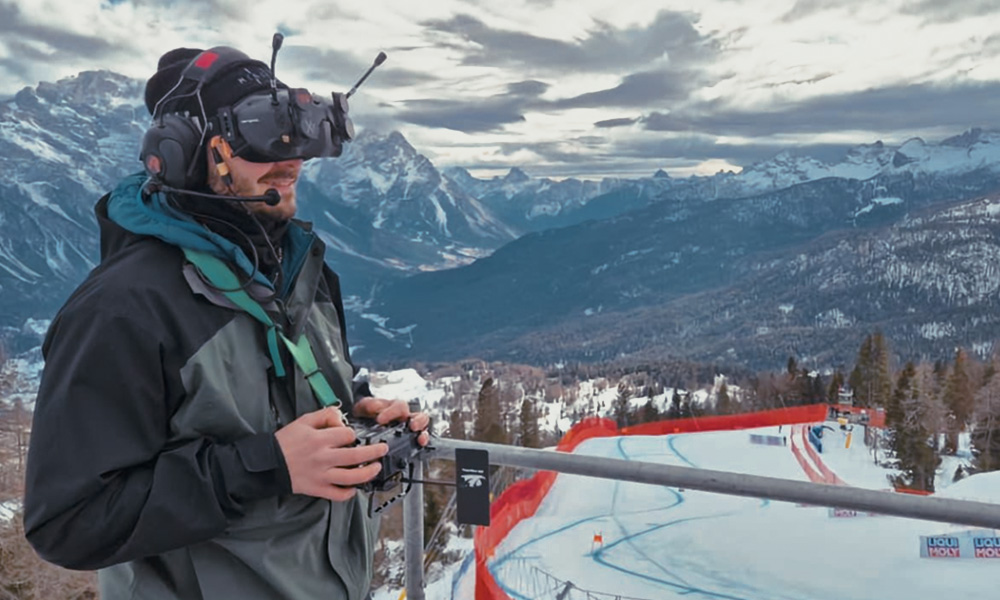
Norwegian athlete Jonas Sandell competed on the Norwegian Ski Association’s B national team as a ski jumper. Wanting viewers to experience what it feels like to soar 140 metres through the air, he transitioned into FPV drone piloting. By combining athletic instincts with aviation discipline, he helped pioneer FPV integration into ski jump coverage at Milano Cortina 2026.

Norwegian athlete Jonas Sandell and his FPV Setup OBS. Photo credit: © Olympic Broadcasting Services (OBS)

His story highlights an important truth:

Elite FPV pilots are trained, not improvised!

Applied Skills Training:
Where Precision Is Built


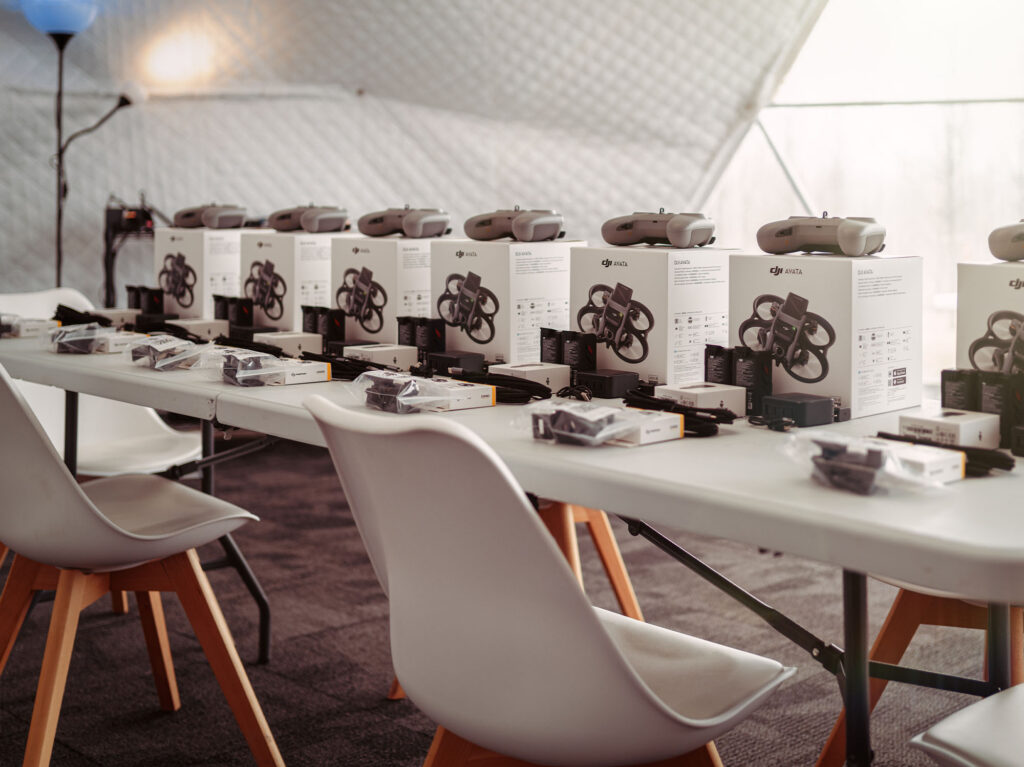
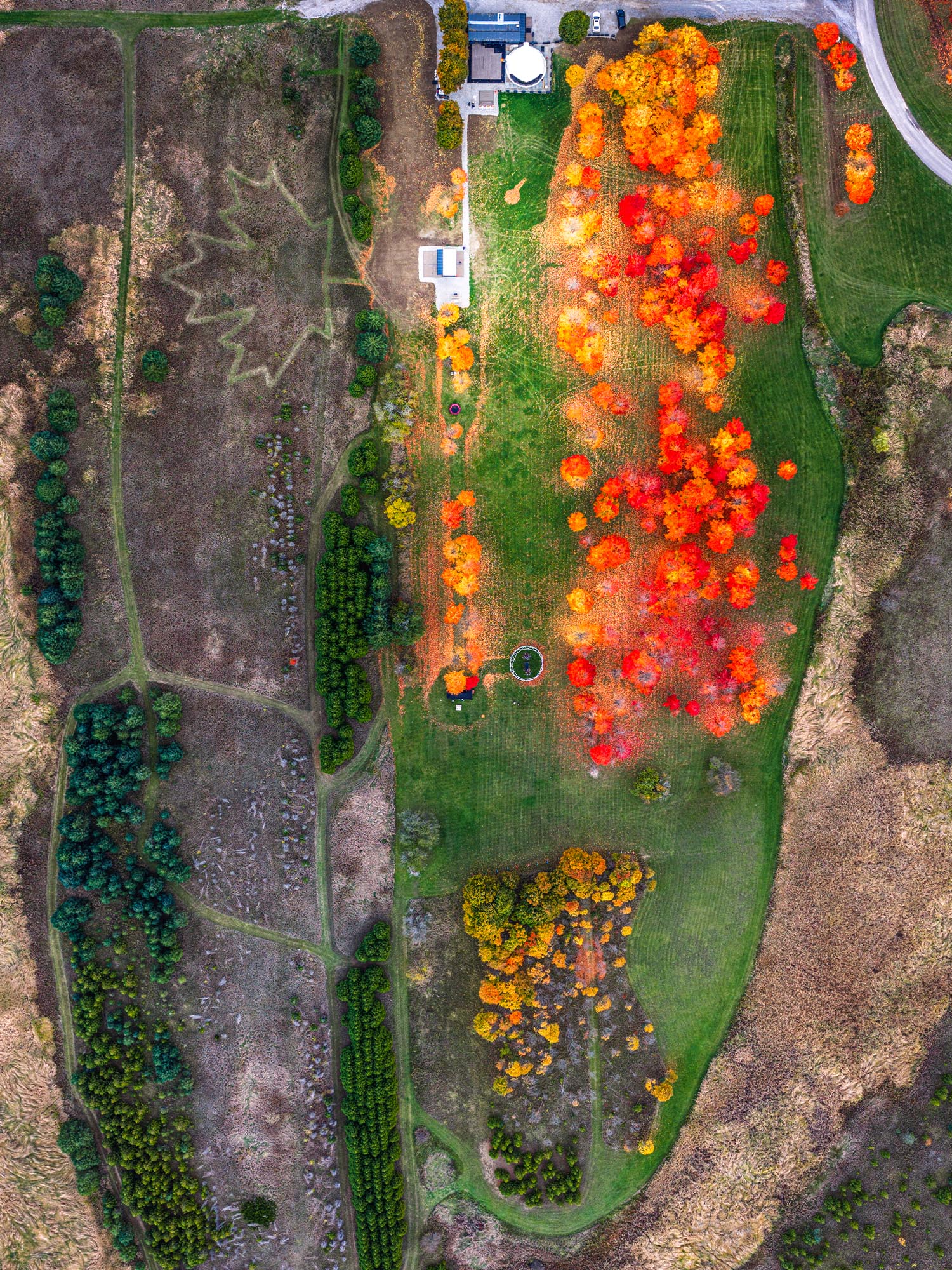
At Drone Vector’s 70-acre flight facility in Kettleby, Ontario, training emphasizes structured skill development. At the centre of the site is a heated, year-round dome supporting classroom instruction, public events, and member sessions. The facility includes individual workstations with power and internet access, meeting space, and year-round operational capability.

The outdoor flight field includes three structured course types:

SEARCH COURSE

A timed 20-minute mission-based challenge requiring visual acquisition and photo confirmation

FPV OBSTACLE COURSE

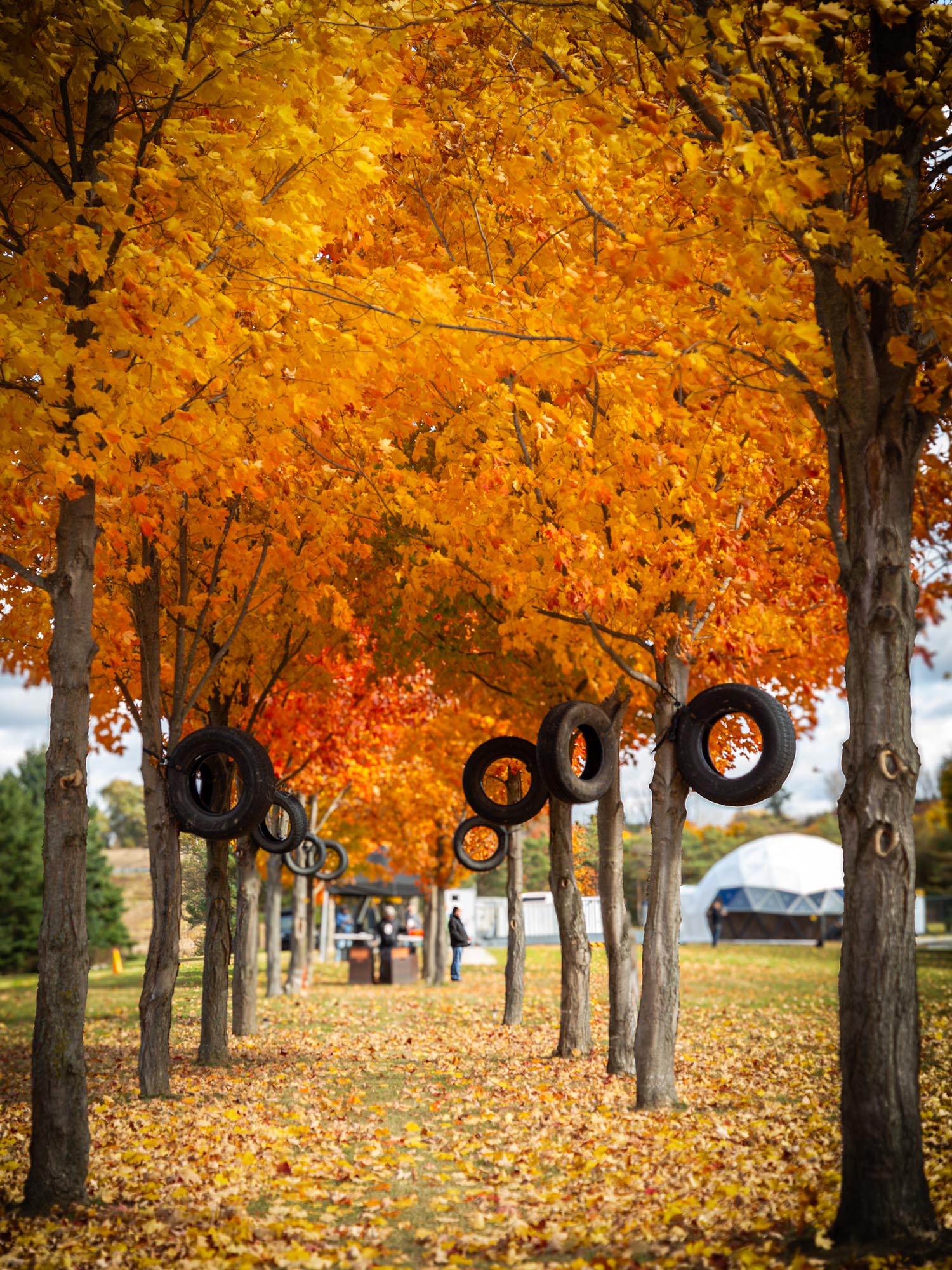
A technical agility environment featuring domes, suspended tires, and natural barriers to refine throttle control and spatial awareness

PRECISION COURSE

Six takeoff and landing stations measure accuracy, efficiency, and time – the foundation of disciplined flight

Skill is built progressively. Precision becomes repeatable. Confidence becomes controlled.

The Drone Vector Test Drive


For those inspired by Olympic FPV coverage, the first step does not need to be high speed.

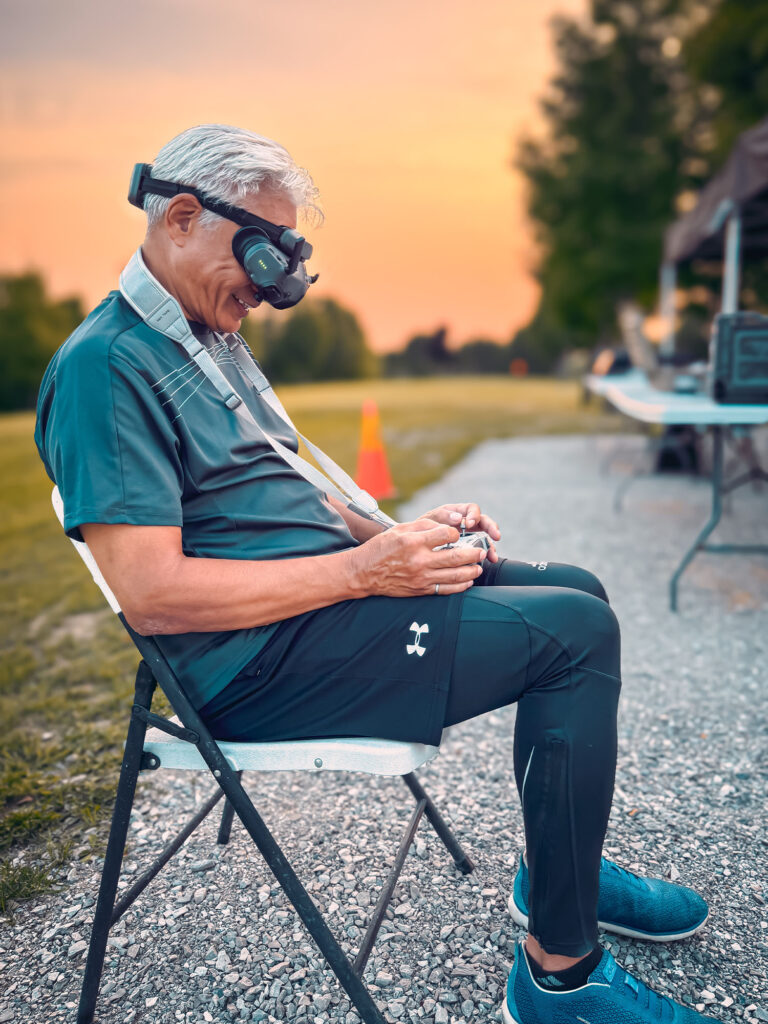
Visitors can experience supervised FPV flight sessions to understand:

Flight Orientation

Obstacle Navigation

Safe Distance Control

Visual Framing

Pilots may also choose to explore conventional drone flight using DJI Mini platforms before progressing into FPV systems.

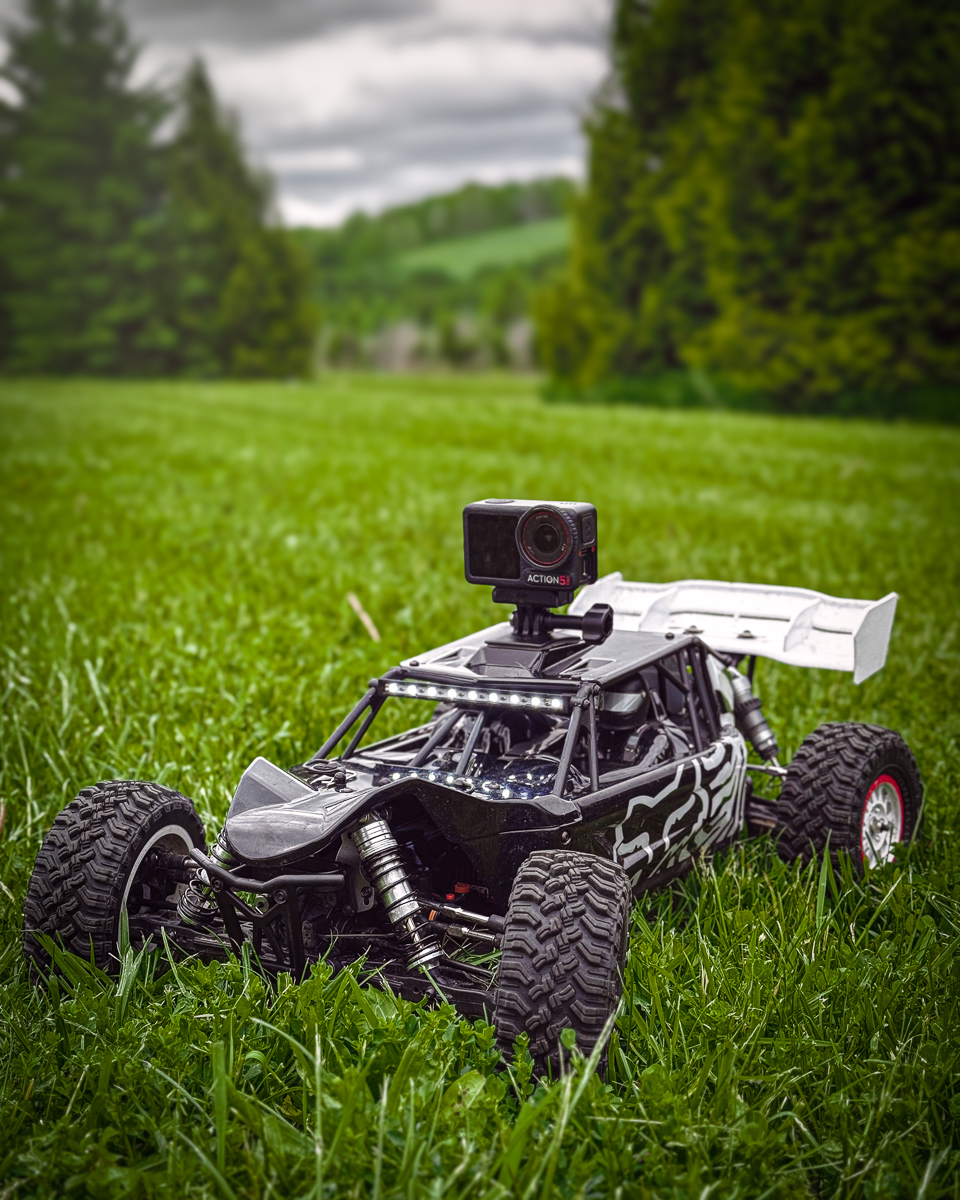
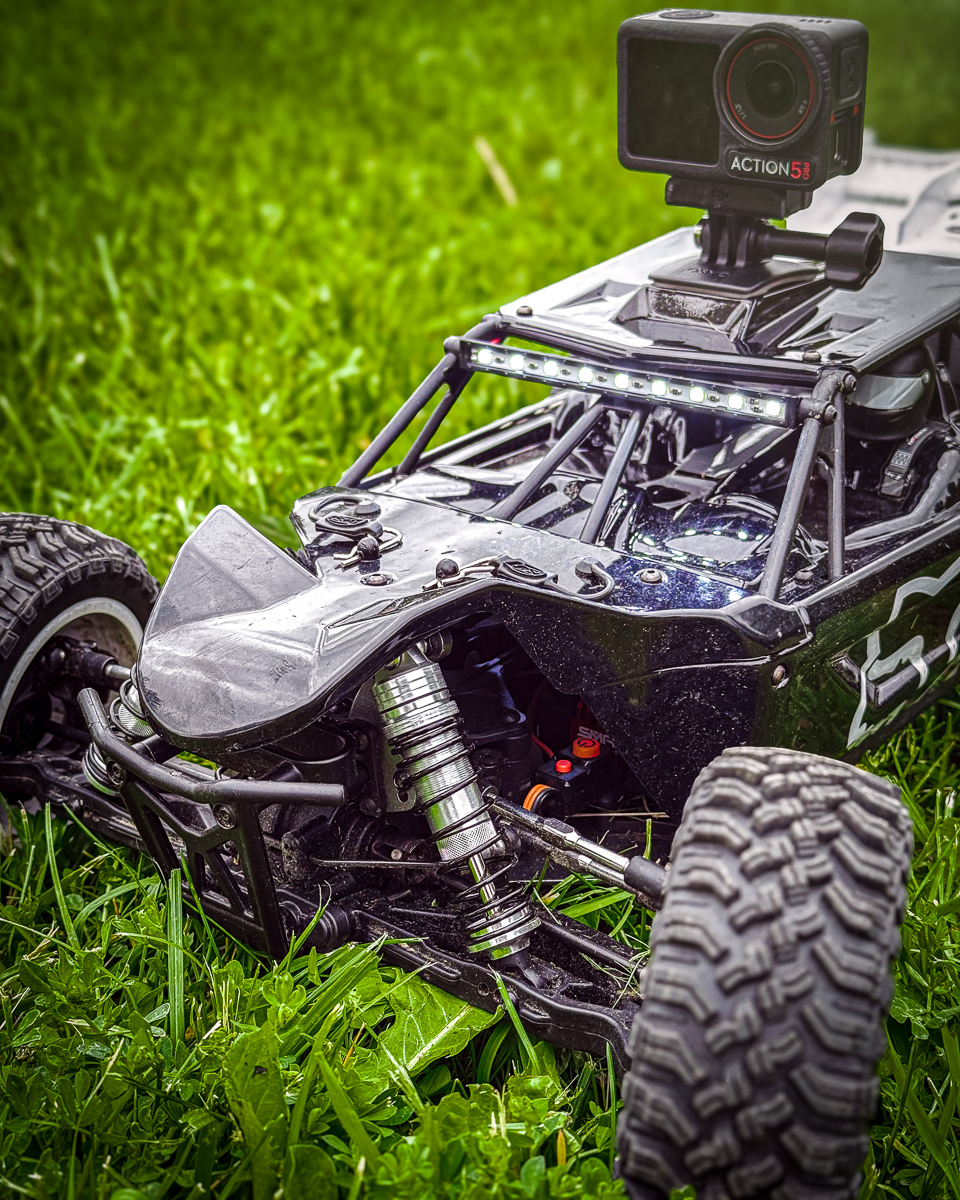
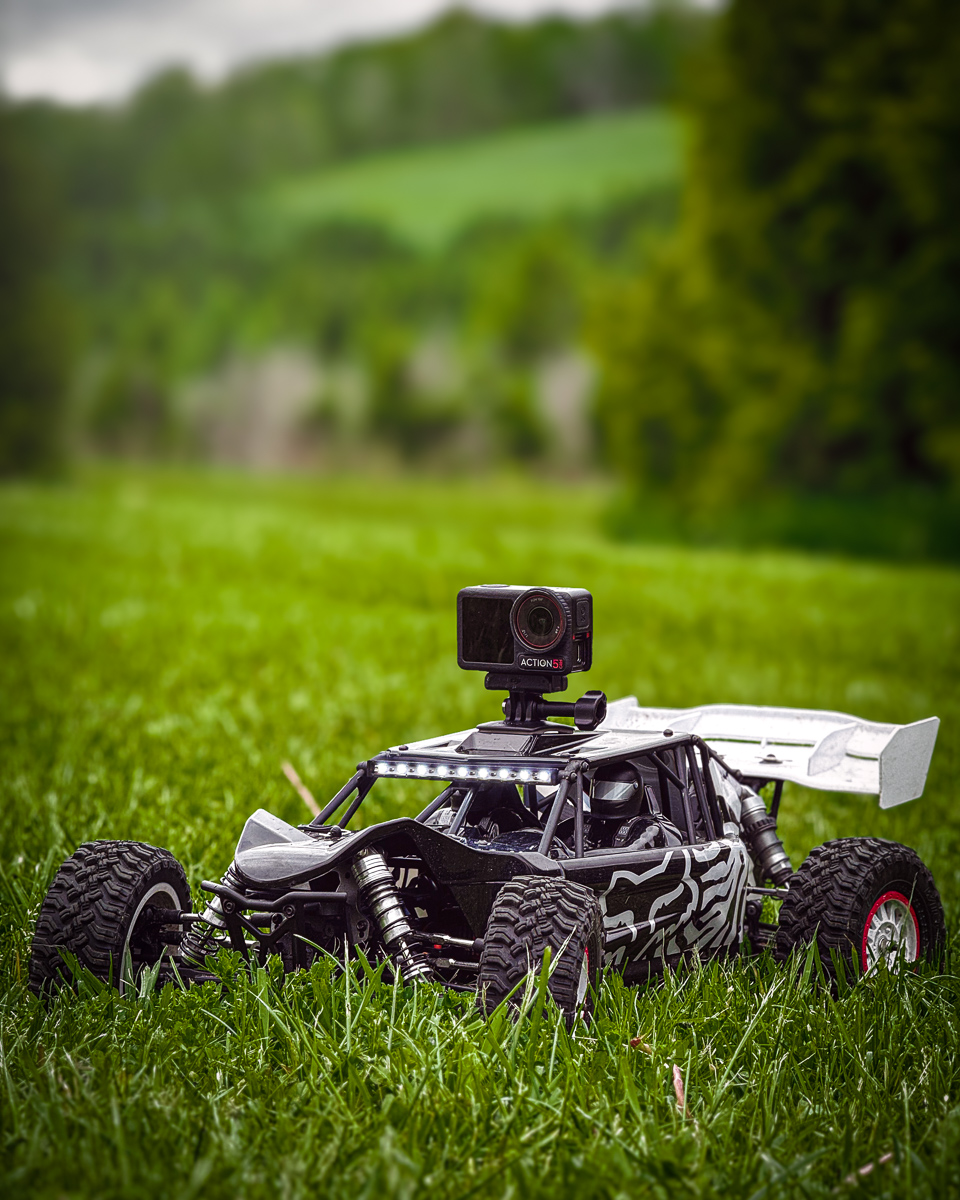
For an added challenge, try tracking a 1/10 scale RC vehicle simulating a slalom run across the airfield – maintaining framing, focus, and safe distance.

Performance begins with fundamentals…

The Starting Line


For those exploring their next step:

Learn about recreational and professional drone pathways;

Visit the 70-acre Flight Facility in Kettleby, Ontario;

Consult experienced pilots;

Explore Transport Canada Basic or Advanced Certification options

Practice consistently in a structured environment

The Podium


Whether your goal is creative storytelling, technical inspection, racing, or immersive sports coverage – skill progression matters. Mastery begins with training. And training is rarely done alone. Behind every Olympic FPV pilot is a team – spotters, directors, technicians, mentors. Drone flying at a high level is both individual and collaborative. Precision improves faster when ideas, experience, and feedback are shared. For many pilots in Ontario, that sense of shared progression is found within a community of like-minded aviators – individuals navigating the same learning curve, refining the same maneuvers and celebrating the same breakthroughs.

If Olympic FPV coverage sparked something in you, consider not just how you will fly – but where you will train?

You are welcome to Book a tour at our 70-acre Flight Facility!

…and experience the environment where progression happens.

The runway is wide open!

Picture of Barry Tripp

Barry Tripp

Drone Visioneer

new
POSTs

Shopping Basket